A Soft Bed Waits (work in progress)
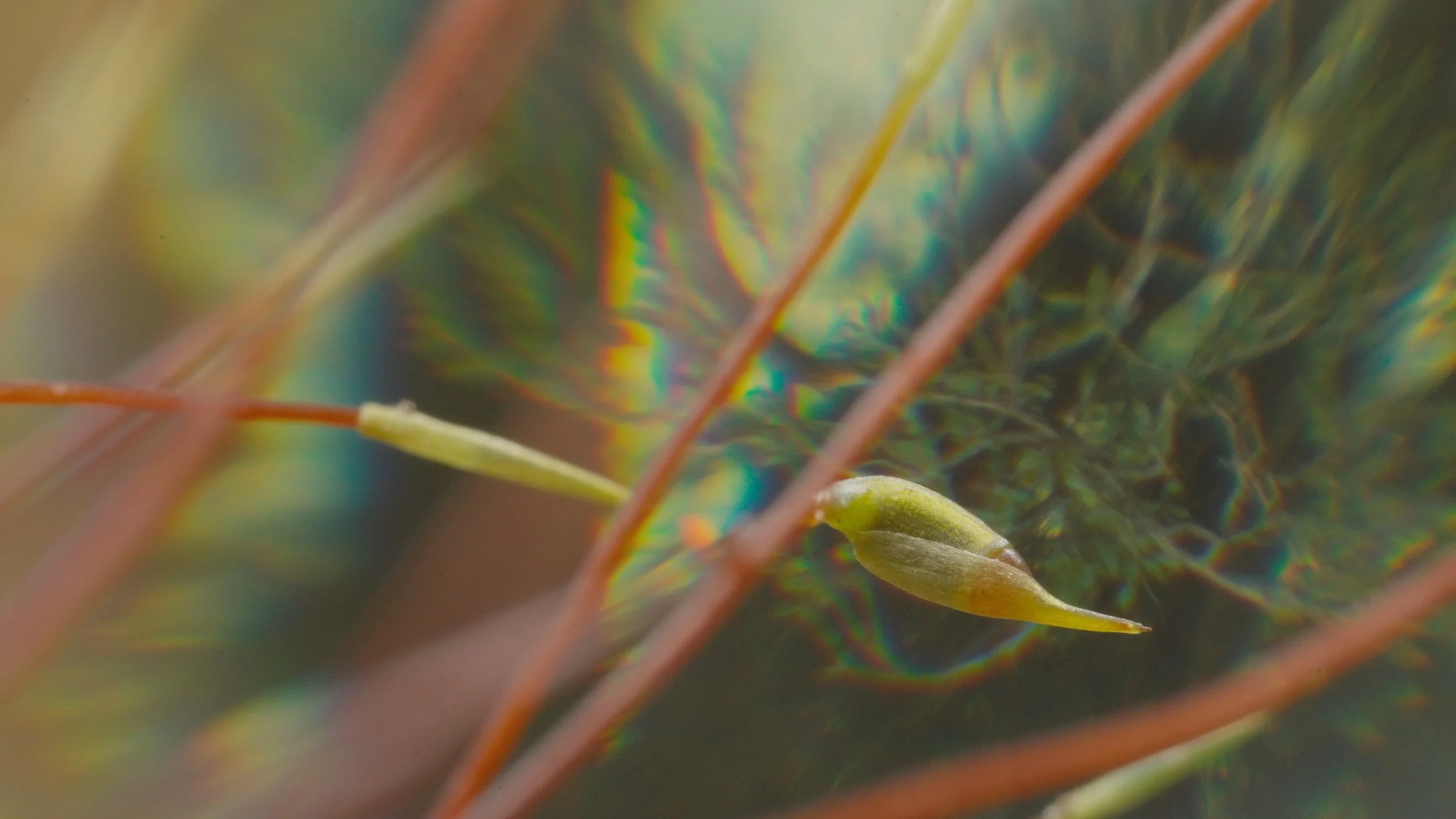
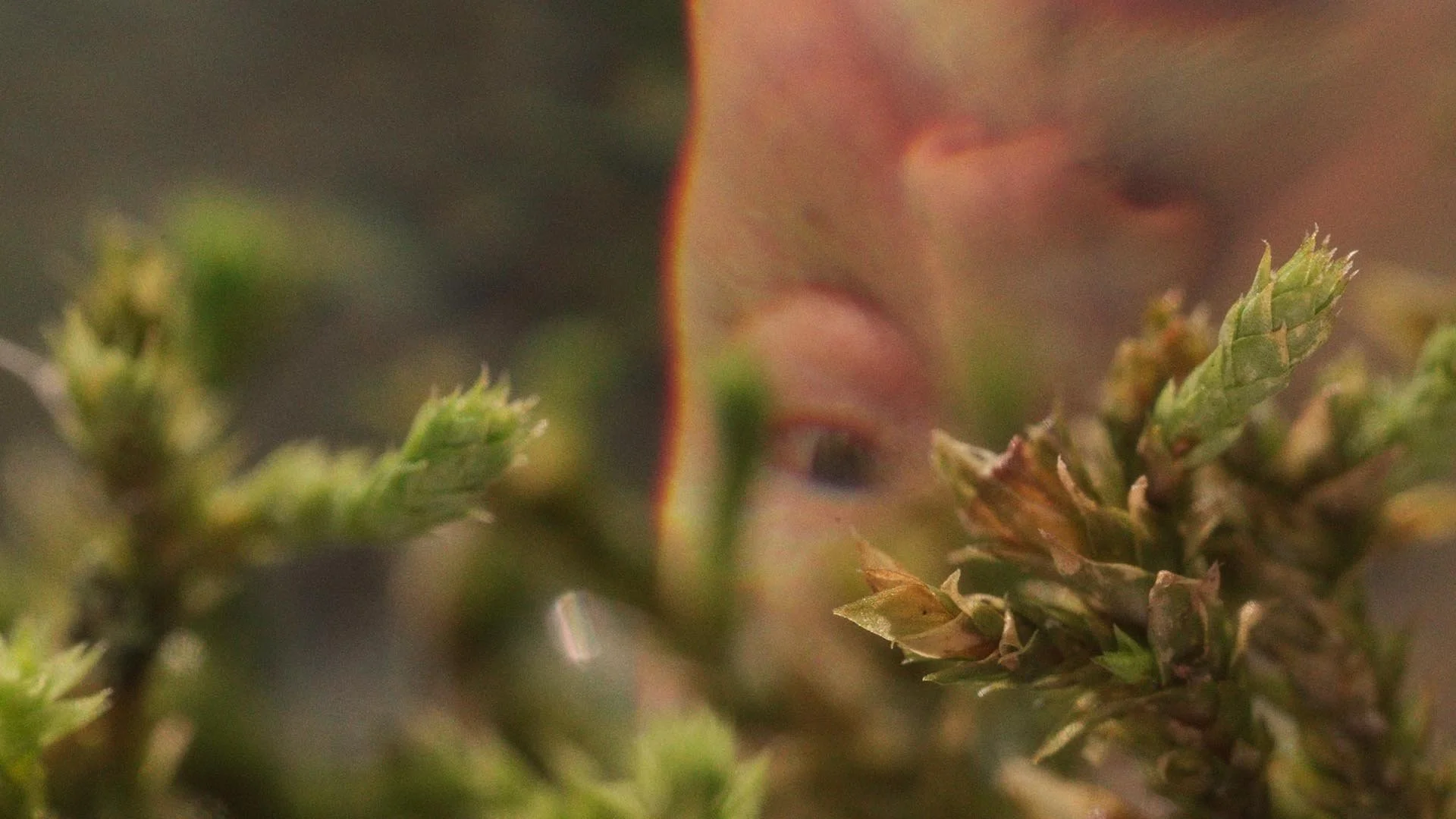
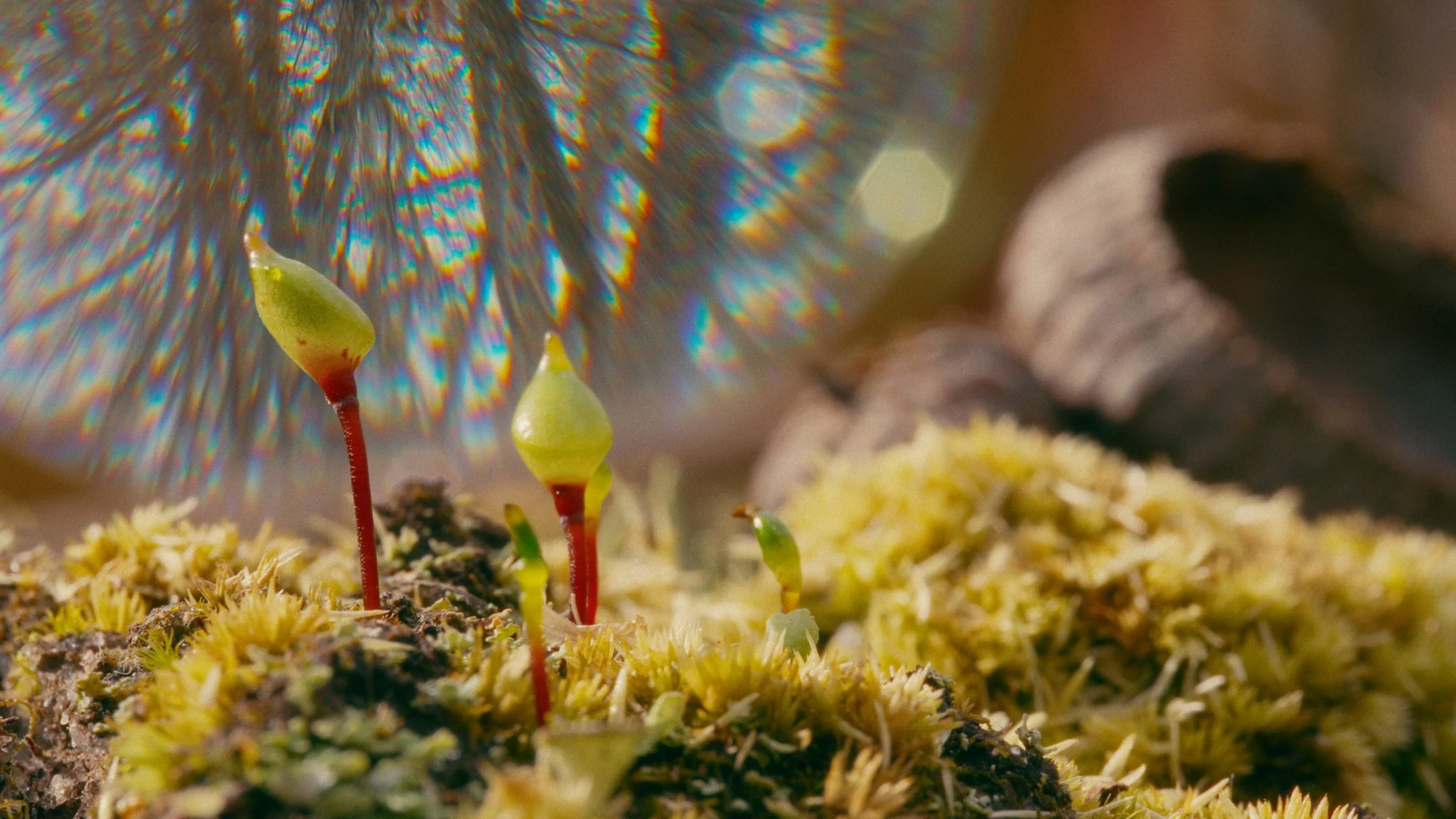
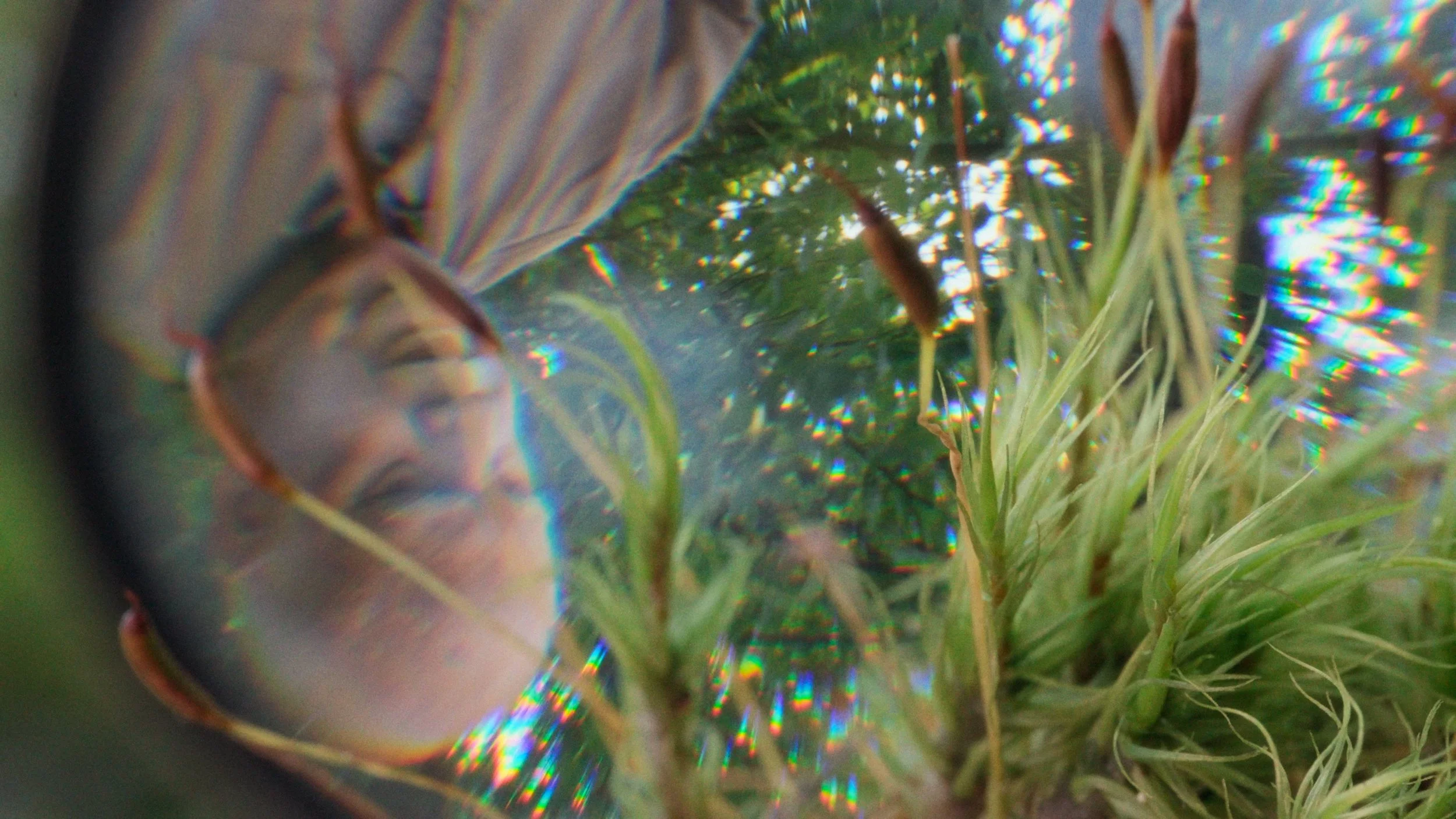
A Soft Bed Waits holds moss and the human world in every frame — moss in intimate detail through macro lenses, the human world caught and inverted in clusters of visible magnifying glasses — and asks what becomes visible when neither organizes the other



A Soft Bed Waits is an experimental feature-length documentary currently in production.
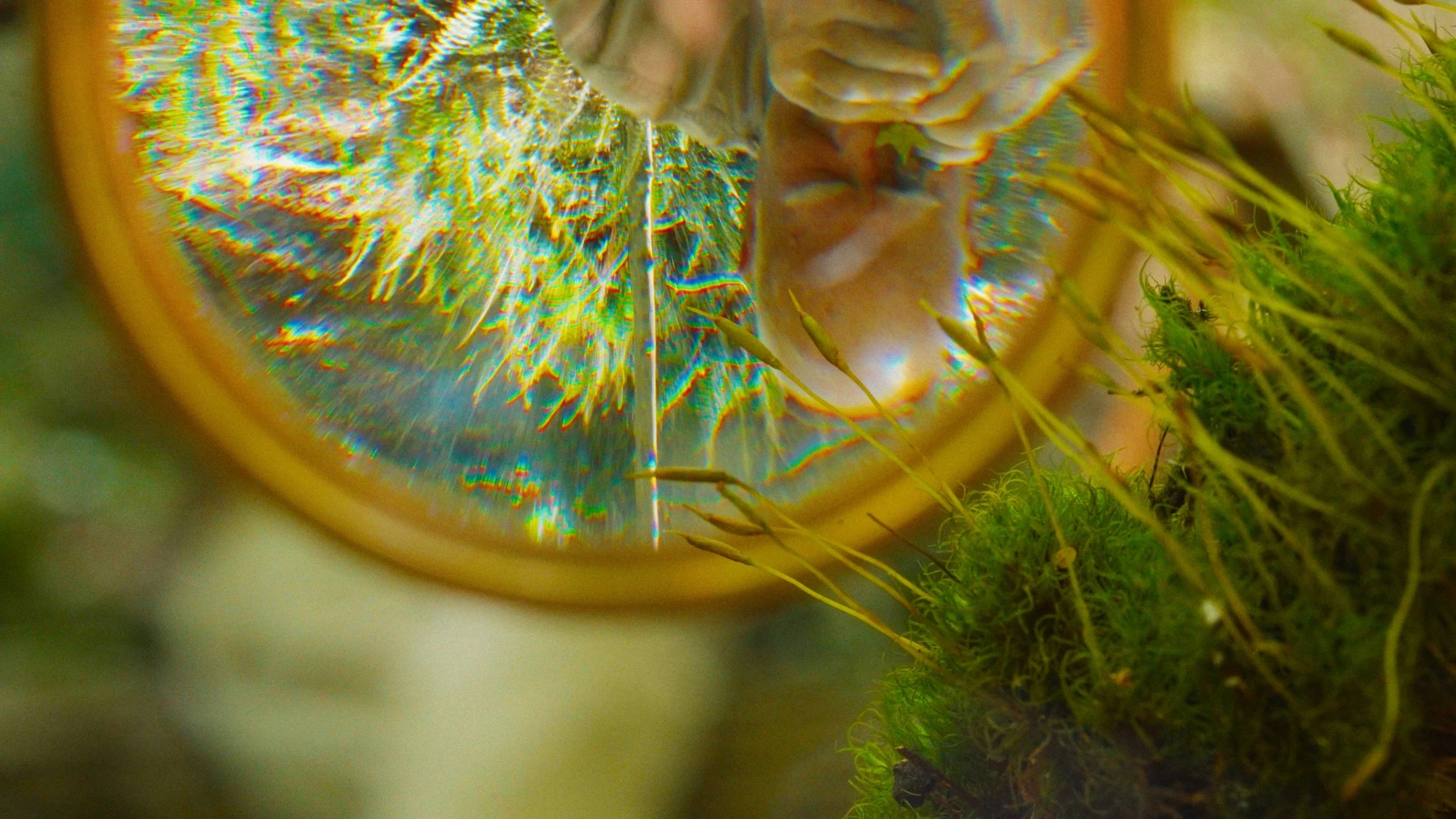
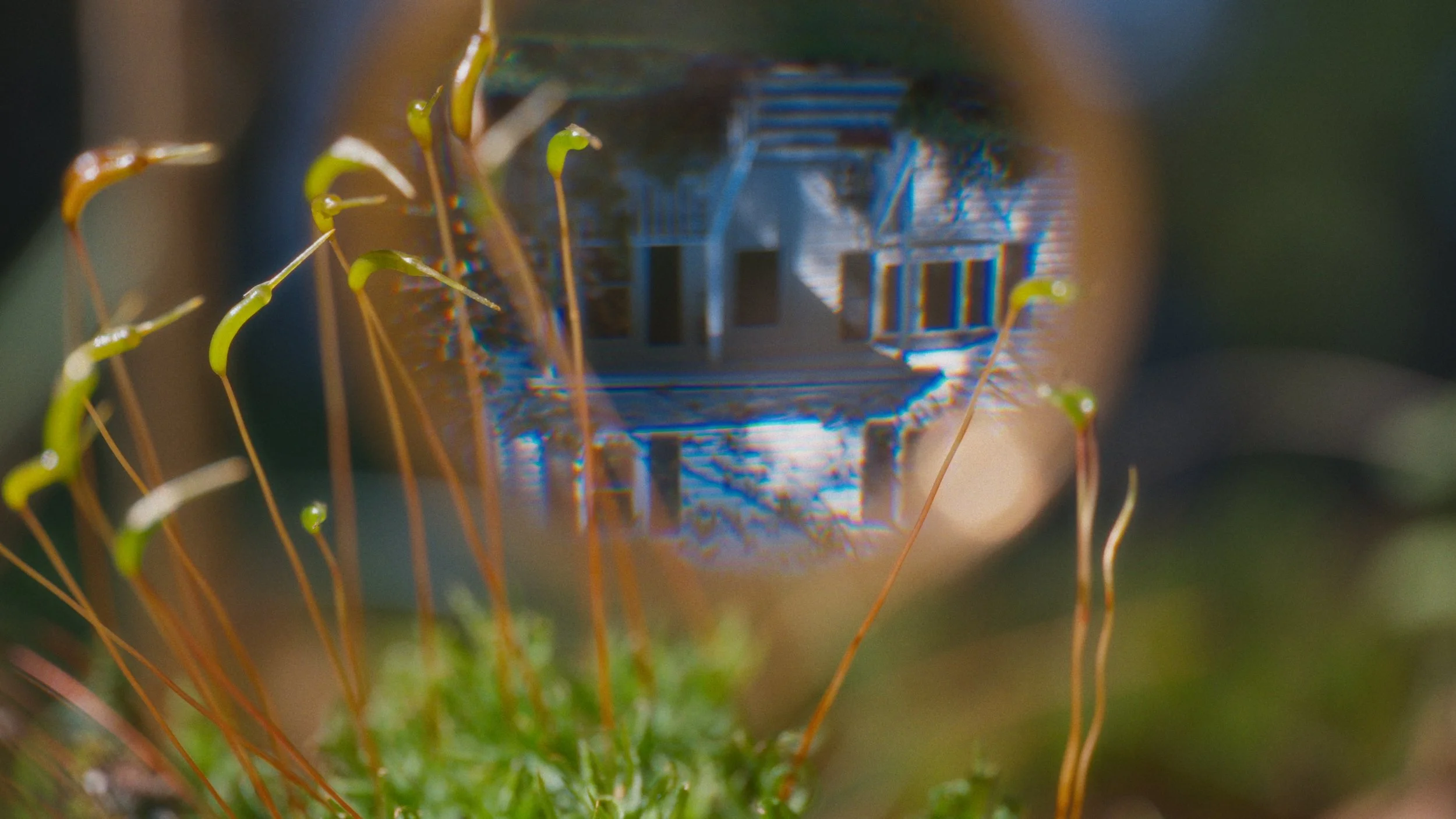
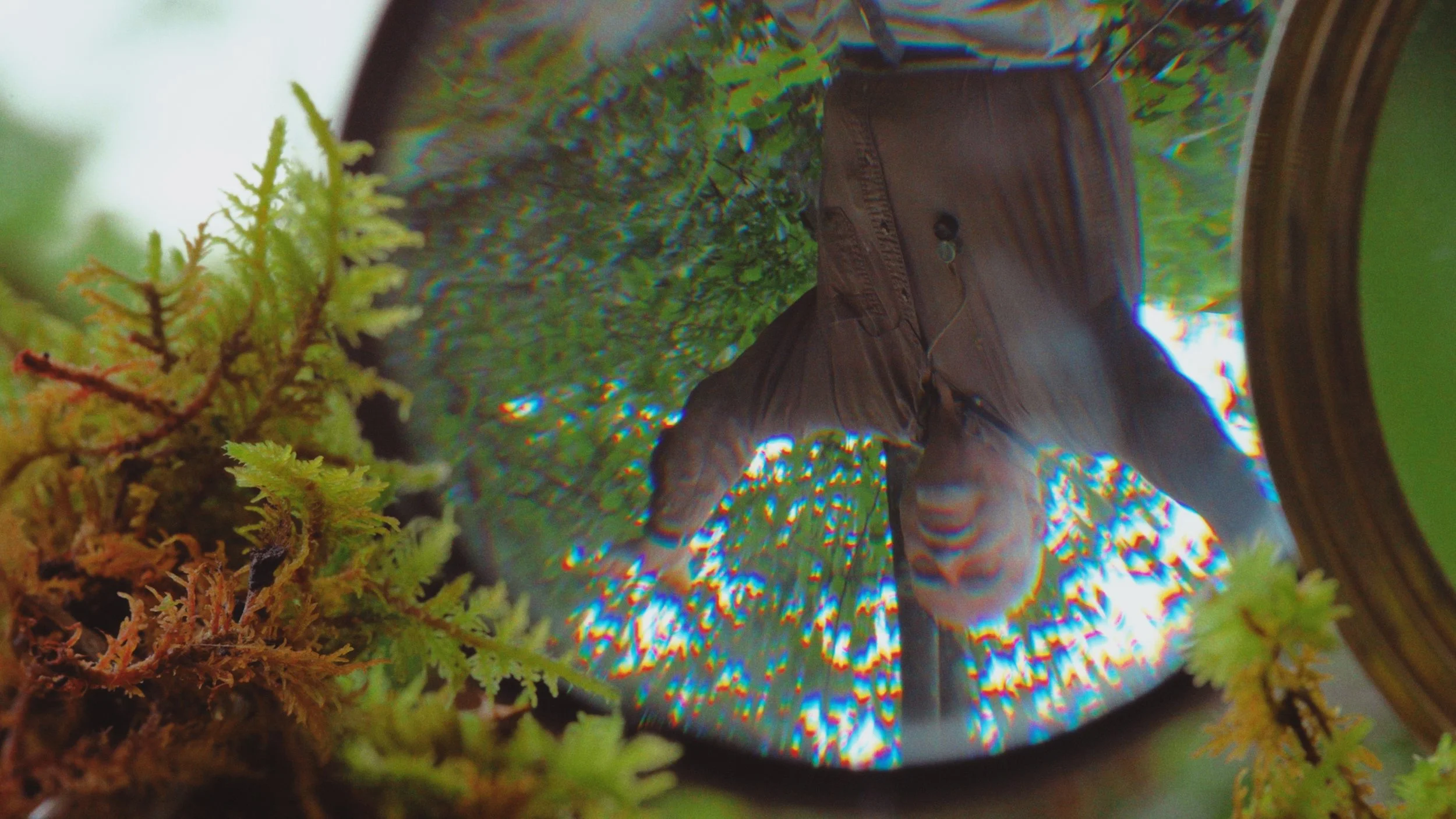
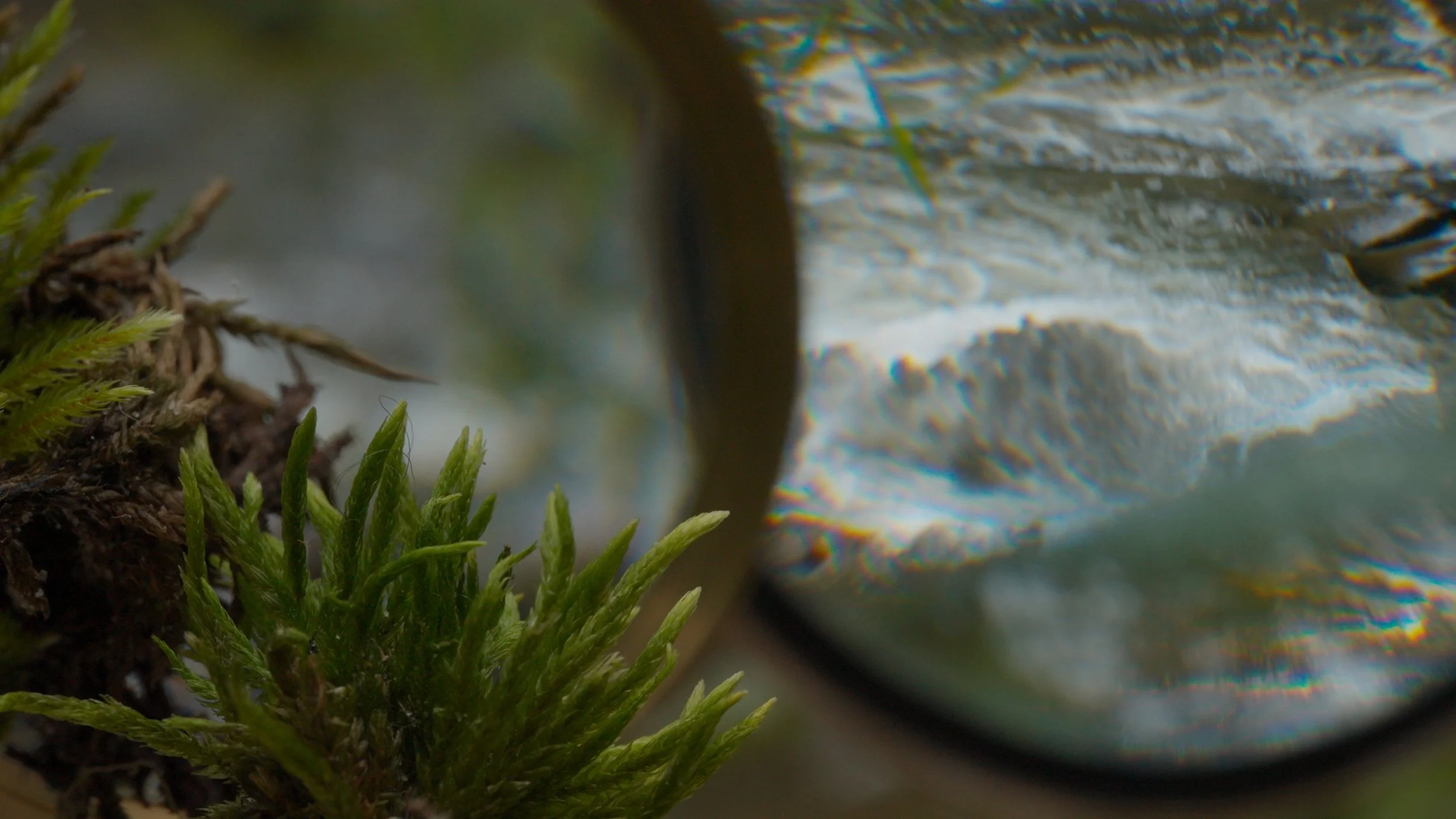
The film’s macro lens and magnifying-glass optical system create a shared perceptual field between moss and the human world, holding both in unstable relation. The work maintains both planes in simultaneous clarity, reorganizing scale and orientation.
Inverted faces in circular brass frames loom above fields of moss.
Treetops scrape the earth.
Teenagers are lifted upwards off of moss-covered rocks into pools above.
Within this field, bryologists—scientists who study moss—enter through sustained, close looking — bodies folded forward, faces hovering centimeters above the moss. Conversations shift between taxonomy and memory, between moss and the lives shaped around it. Bill Buck, Curator Emeritus of the New York Botanical Garden, kneels among the moss, seen upside down. He spent fifty years studying moss alongside his husband, a lichenologist. Morphology turns to reflections on the life they built and the spiritual questions that arose after his husband's death.
Blair Young, a PhD candidate at Rutgers, is drawn to moss as a life-form that thrives by going unnoticed — a quality she relates to through her experience as a trans woman.
Guided by these encounters and by moss itself, I am visible in the film — setting up the system, negotiating the inverted image, conducting the experiment of sustained attention on myself first. The film records transformation in process, uncertain of its outcome.
Director, Cinematographer, Editor — David Scott Kessler
Featuring — William Buck, Curator Emeritus, New York Botanical Garden
Microscopy — Steph Mantis
Funded in part by the Philadelphia Independent Media Fund Planning Grant
Residency support — Sitka Center for Art and Ecology